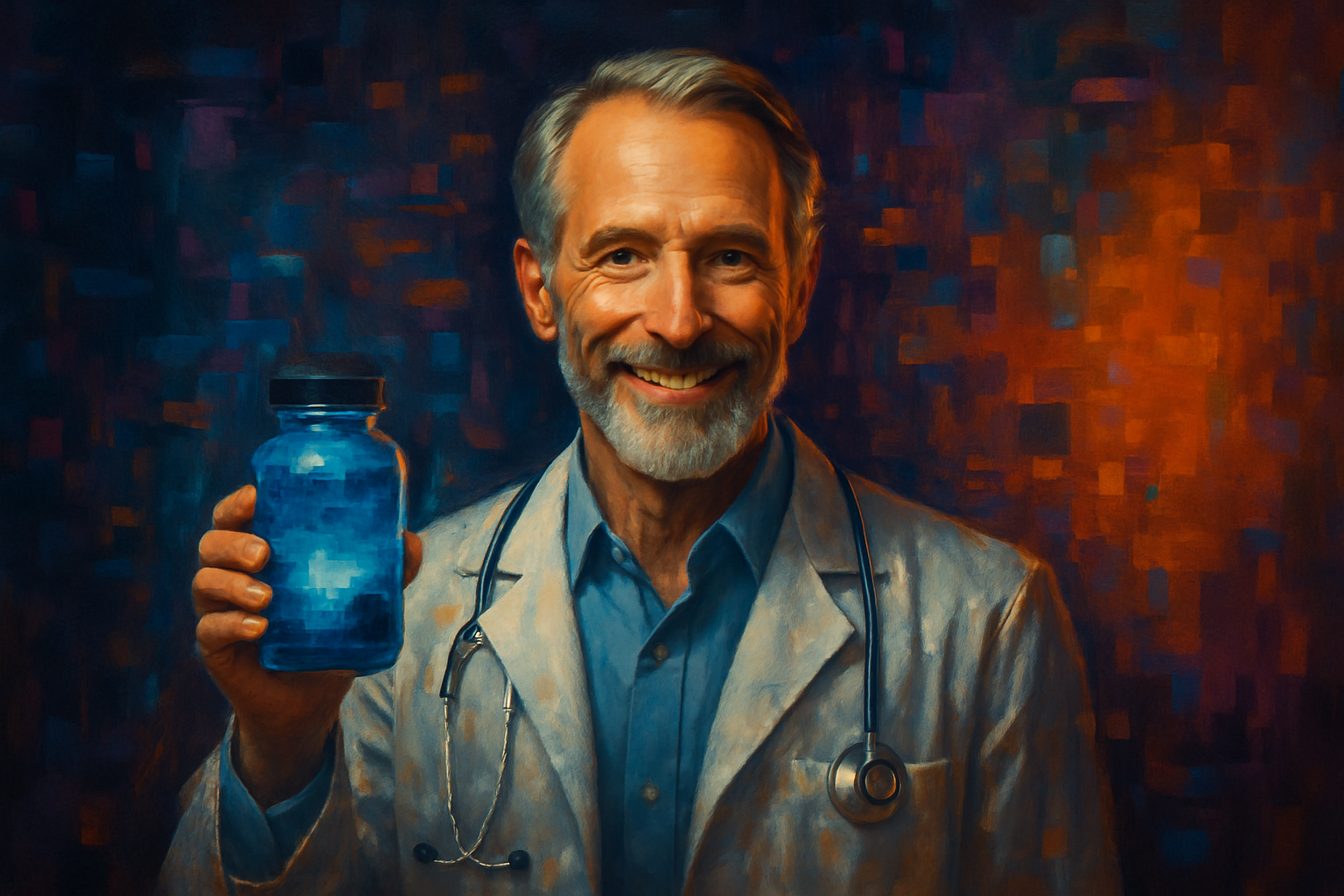
The advertising industry has spent decades refining the art of the testimonial, that most elemental form of persuasion in which a person of apparent credibility looks into a camera and says, in effect, "Trust me." Now it appears that artificial intelligence has mastered the form so thoroughly that even the person doing the trusting might be synthetic.
Dr. David Amron, founder of the Roxbury Institute and the Lipedema Society, testified before the United States Senate Special Committee on Aging last month that scammers had fabricated a video of him endorsing a "miracle" cream for lipedema, a condition causing abnormal fat buildup in women. The perpetrators, Dr. Amron told the committee, combined actual footage from his YouTube channel with artificially generated likenesses and voices, producing what he called "a polished advertisement that appeared entirely legitimate."
(One imagines the scammers' creative brief: "Make it look real, but not too real, and definitely don't run it past legal.")
The National Advertising Division of BBB National Programs, the industry's self-regulatory body, has been watching these developments with what Phyllis Marcus, its vice president, described as close attention. The division has not yet brought a case involving artificial intelligence influencers, Ms. Marcus said, but she would not be surprised if such cases emerge in the future.
The core problem, as Ms. Marcus explained it, is almost philosophical: an avatar cannot have used a product and experienced its benefits. "One of the basic tenets of influencer marketing is that an influencer should be speaking about their own experiences," she said. A synthetic spokesperson, by definition, has no experiences to speak of.
The Consumer Federation of America cited research indicating that advertisements from the top 30 Medicare scammers generated 215 million impressions on Facebook in the past year alone — six times the reach of all previous years combined.
Ms. Marcus offered a formulation that might serve as the industry's new catechism: "AI is a tool, not a shield from accountability."
The miracle cream, presumably, remains unavailable at finer pharmacies.
Original story published in MediaPost: "As Fake AI Influencers Grow, NAD Takes Notice"