There is a particular kind of diplomacy that involves showing up at your rival's house and insisting you were never really rivals at all.
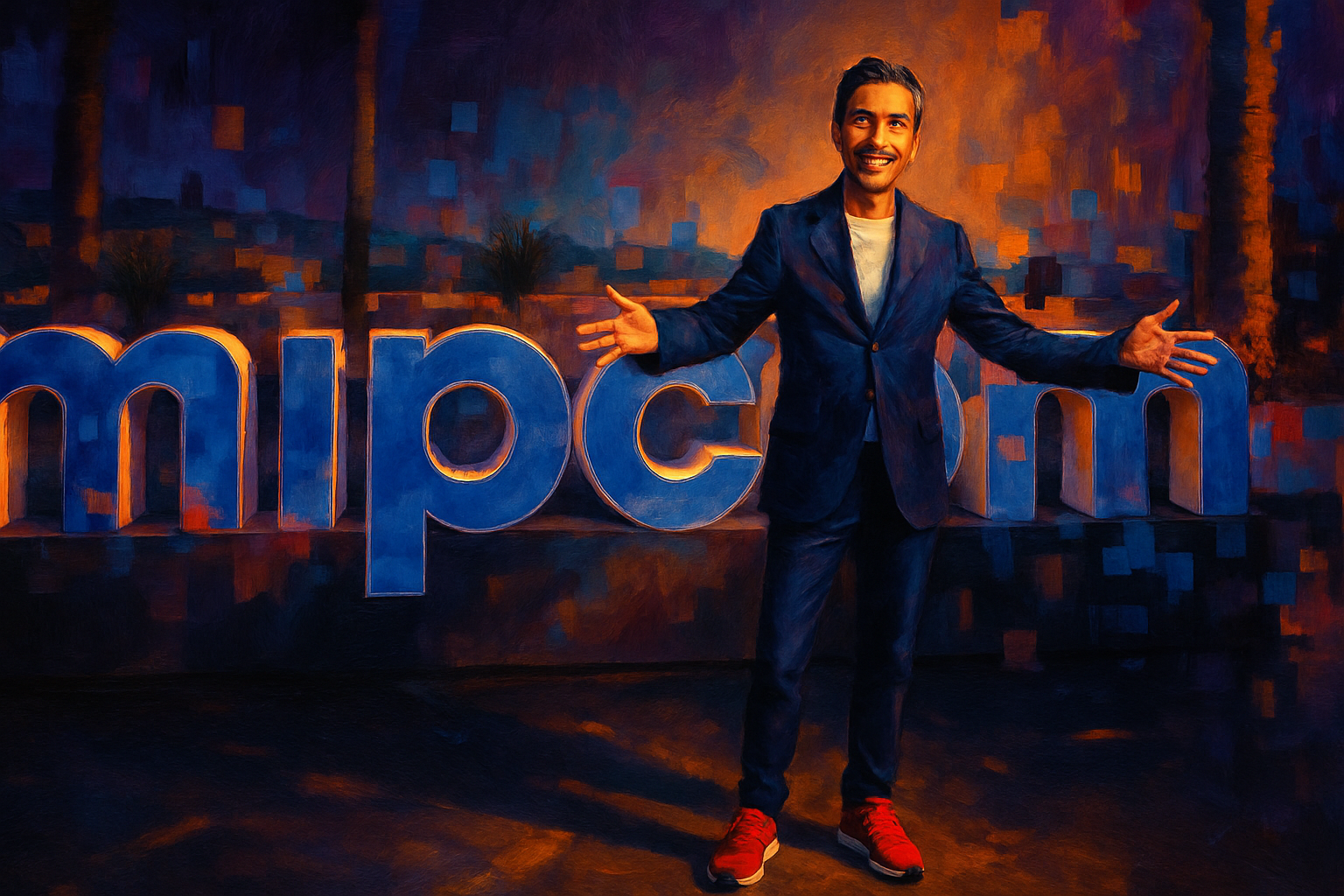
YouTube, which has spent the better part of two decades doing to traditional television what traditional television once did to radio, arrived at Mipcom in Cannes this week with a message of reconciliation. Pedro Pina, a vice president at the Google-owned platform, took the stage alongside Stephan Schmitter, the chief executive of RTL Deutschland, to argue that the world's largest video distributor would prefer to be seen as a partner rather than a predator.
The session was part of what might charitably be called a charm offensive, building on Mr. Pina's MacTaggart Lecture at the Edinburgh Television Festival earlier this year. His thesis, repeated in Cannes, is that YouTube is merely a distributor — a conduit, not a competitor. "We as a platform are not invested in producing content," Mr. Pina said, adding that the company believes "there are incredible companies around the world that really understand what beautiful content looks like."
(One imagines the incredible companies nodding cautiously.)
Mr. Schmitter, whose network had "no relationship or partnership with YouTube" as recently as three years ago, offered a case study in détente. RTL has begun placing older programming on the platform, including some 200 episodes of "Cobra 11," a long-running German action series that Mr. Schmitter said "had no more value in our ecosystem." The result, he reported, was a 123 percent increase in first video views on RTL's streaming service and a 26 percent lift in subscriptions — the kind of numbers that tend to soften ideological objections.
Mr. Pina positioned YouTube's revenue-sharing model as evidence of aligned interests. "We cannot be successful if our partners are not successful," he said, noting that the platform shares more than half of its advertising revenue with content owners. He also pitched YouTube as a risk-free laboratory for experimentation: "If you do something on YouTube that is not successful, it's because no one was watching."
Whether legacy broadcasters will embrace the platform that helped erode their audiences remains to be seen. But in Cannes, at least, the conversation has shifted from competition to cohabitation — a development that says as much about television's current circumstances as it does about YouTube's intentions.
Original story published in The Hollywood Reporter: "YouTube Making Nice with Legacy TV"