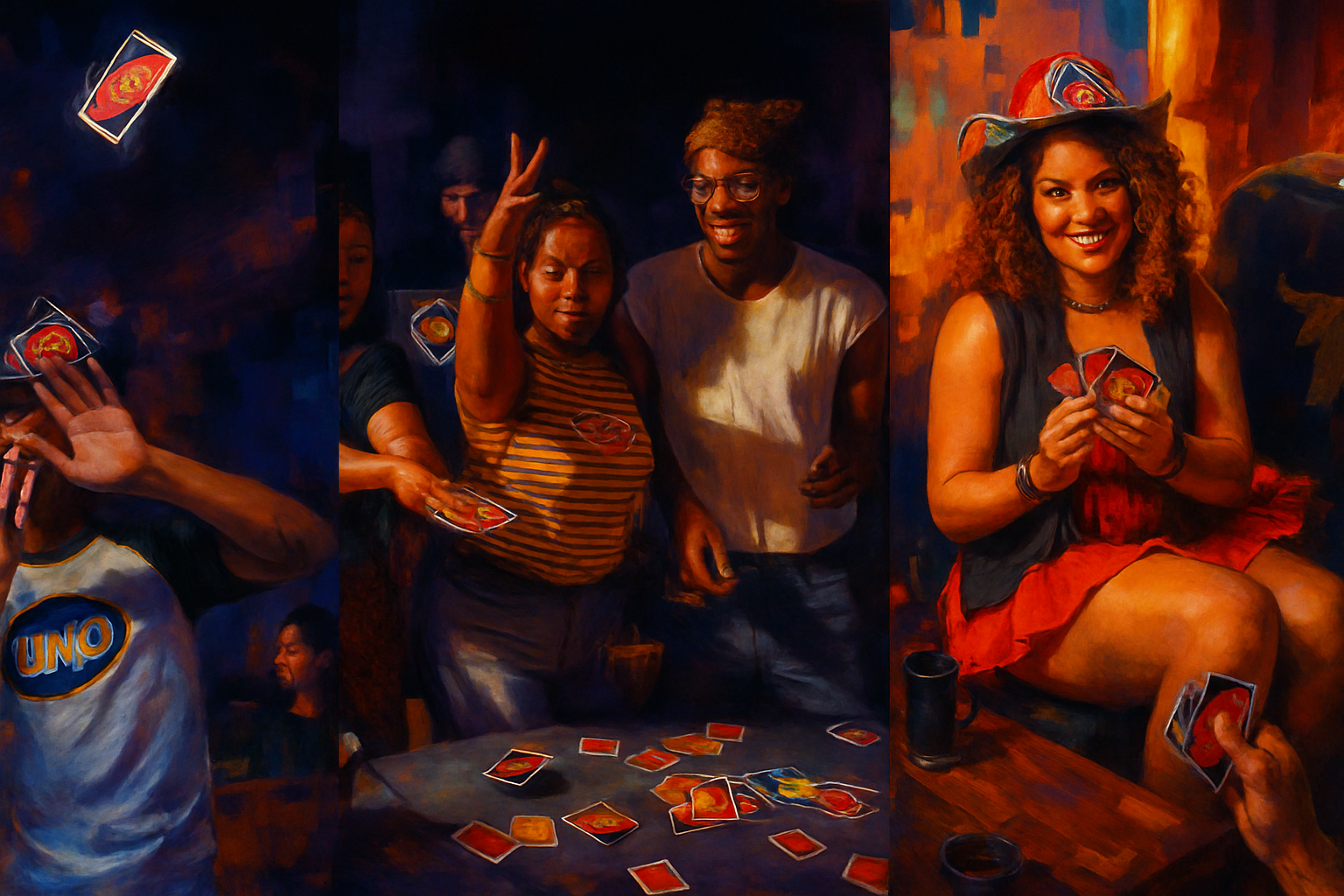
The line between a product and a platform has always been a little blurry in the toy business, but Mattel appears to have found a way to make a 50-year-old card game function as both.
When Uno Social Clubs, a traveling pop-up activation built around the company's flagship card game, launched last summer in nine locations, the response was apparently sufficient to settle any internal debate about whether to continue. "We saw lines around the block at multiple destinations," said Katie Buford, the vice president and global head of Mattel Games. By the time the activation wrapped, she said, the brief for year two had essentially written itself — largely by the fans themselves, who took to social media to request additional cities.
This summer the program returns with 14 stops across five American cities and eight international destinations, an expansion that Ms. Buford described as a direct response to that consumer feedback. For an industry that talks frequently about listening to audiences, Uno appears to have a documented paper trail: the requests came in city by city, and the expansion map followed.
The Social Clubs effort is the most deliberate expression to date of what Mattel sees as Uno's broader cultural positioning — a game that, in Ms. Buford's words, "transcends age, transcends cultures." The brand has been showing up in places that would have seemed unlikely for a card game a decade ago: Pharrell Williams's Met Gala afterparty, a partnership with Vrbo involving elaborate vacation homes, a line of branded merchandise. (Ms. Buford wore some of it to her interview, which is either commitment or strategy, or possibly both.)
Whether experiences like Social Clubs are becoming as central to brand equity as paid media is a question Ms. Buford did not hesitate on. "100%. Absolutely," she said, pointing to what she described as a demographic reality: younger consumers in particular place a premium on shared, in-person activity.
Whether the activation eventually becomes an annual fixture or remains a touring curiosity will depend on the same metrics that validated year one — attendance, social engagement and the volume of fans asking to be next. If the pattern holds, Uno may have found something more durable than a pop-up: a standing invitation, renewed by demand.
Original story published in The Drum: "How Uno turned a card game into a live experience brand | The Drum"