There is a saying on Madison Avenue that has survived decades of consolidation, digital transformation, and the rise and fall of several holding company empires: nothing kills a bad product faster than good advertising.
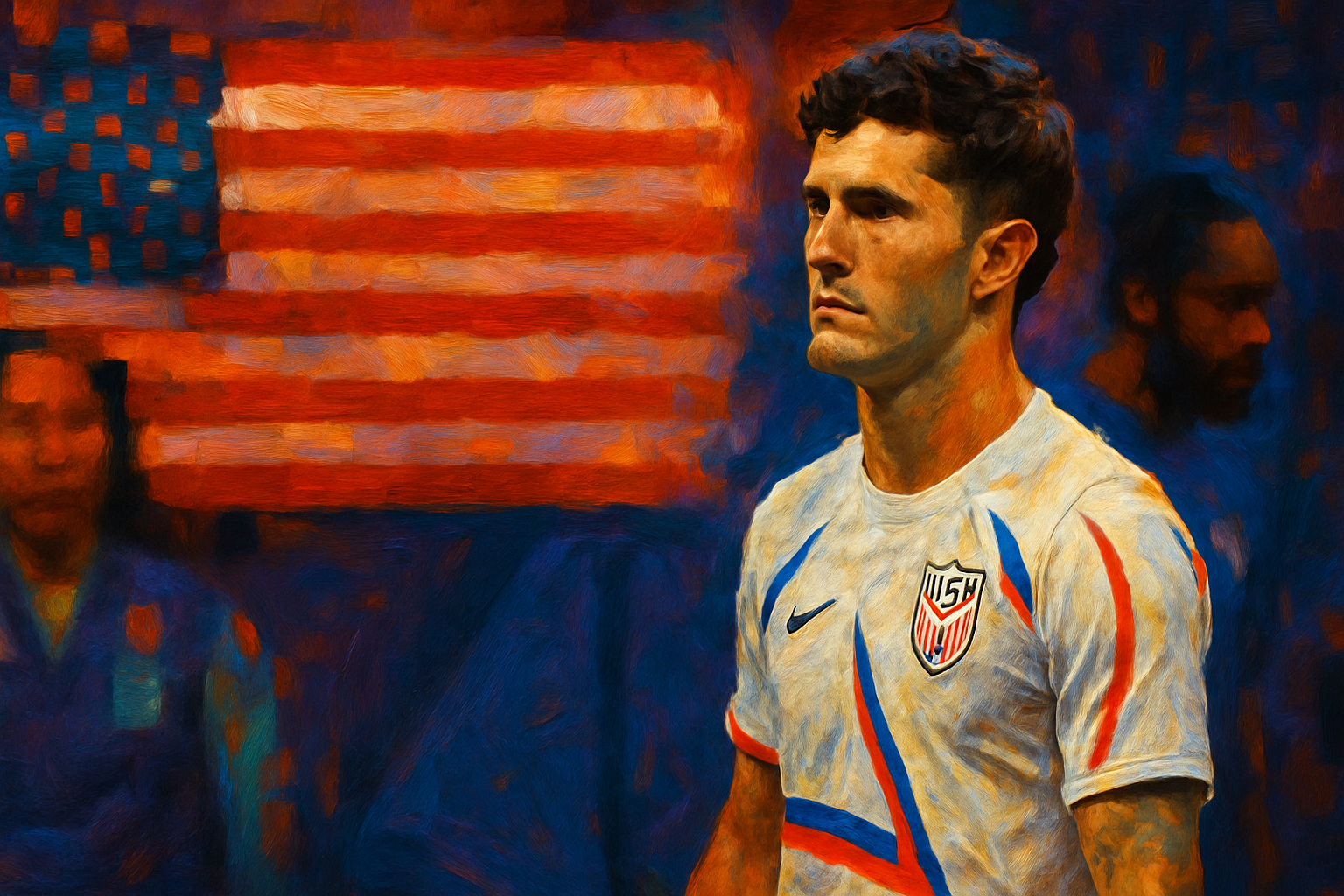
Christian Pulisic, the American soccer star who entered the 2026 World Cup as the face of at least half a dozen major national campaigns, is discovering a corollary to that axiom. When the product underperforms on the world's largest stage, the advertising doesn't quietly disappear. It keeps running.
In the week since the United States men's national team was eliminated — a 4-1 loss to Belgium that has been described by some former players as humiliating — Mr. Pulisic has remained an inescapable presence during World Cup broadcasts. There he is, sharing a Michelob Ultra with Lionel Messi. There he is again, dribbling for Visa. And in what may be the most unfortunate case of scheduling, a Degree deodorant spot continued to air in which the 27-year-old midfielder speaks earnestly about creating a "legacy" in which admirers say, "This guy changed American soccer."
(One television producer observed on social media that the timing was, perhaps, suboptimal.)
Mr. Pulisic's endorsement portfolio — estimated at $20 million annually and including Puma, Volkswagen, Hershey, and Chobani — had been built on a premise that he would deliver in this tournament. He did not. The situation recalls Reebok's lavishly promoted "Dan & Dave" campaign before the 1992 Barcelona Olympics, in which one of the two featured decathletes failed to qualify and the other won bronze. It was, at the time, considered the most expensive lesson in advertising hubris since New Coke.
Ernest Lupinacci, a longtime copywriter whose credits include campaigns for ESPN and Nike, offered a characteristically blunt assessment. "Some men are born great," Mr. Lupinacci said. "Some men achieve greatness. And some men have greatness thrust upon them. But, apparently, none of those men are named Christian Pulisic."
There is, it should be noted, a four-year intermission before the next World Cup. Dan O'Brien eventually won gold in Atlanta in 1996. Whether Mr. Pulisic can author a similar redemption narrative remains to be seen — though for his sake, one hopes the Degree commercials will have stopped running by then.
Original story published in Front Office Sports: "Christian Pulisic World Cup Fiasco a Cautionary Tale for Marketers"