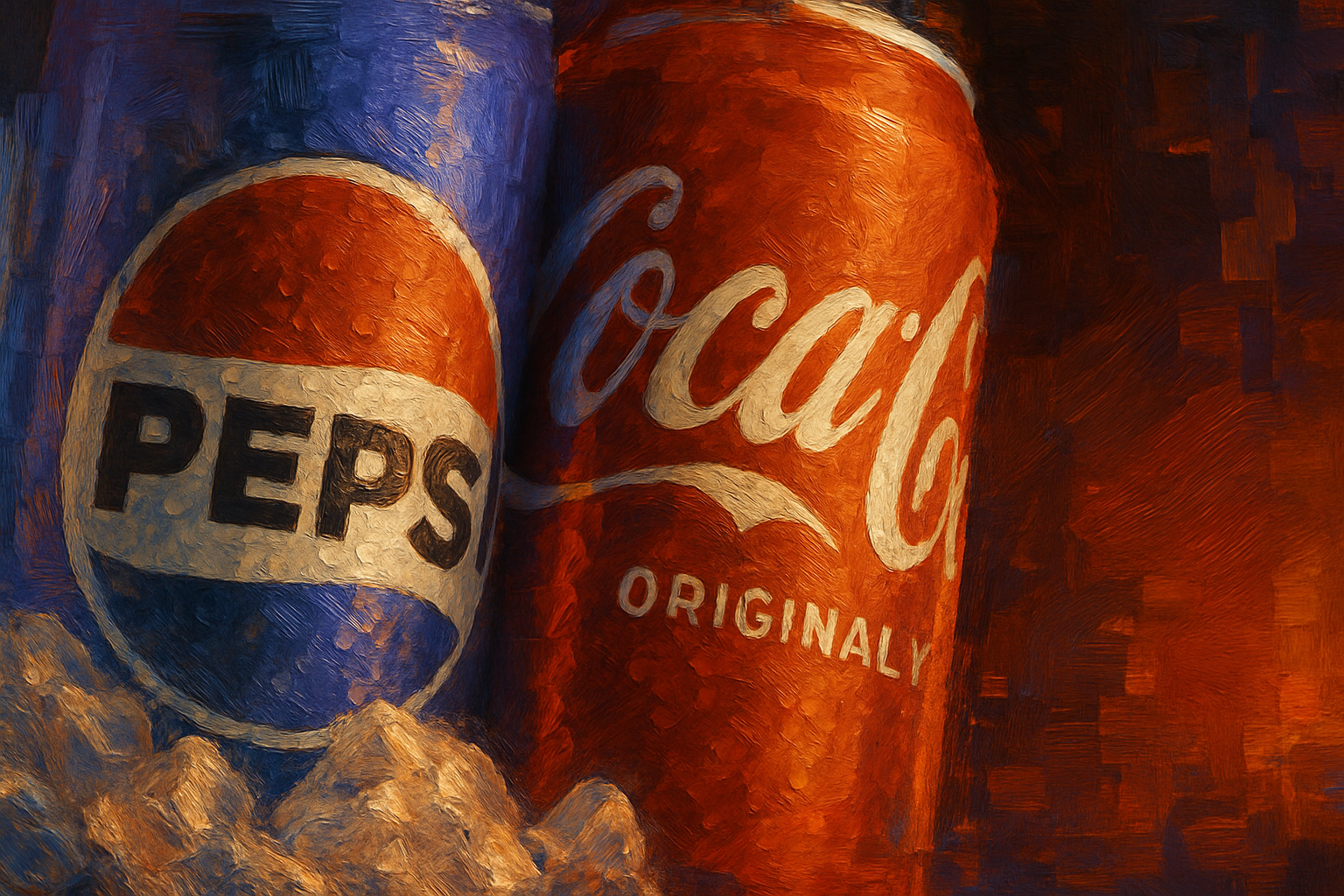
The cola wars have been fought on many fronts over the decades — in supermarket aisles, during Super Bowl commercial breaks, at the soda fountains of the American imagination — but rarely have they played out quite so awkwardly in the carpeted conference rooms of the global agency holding companies.
The situation is this: Publicis Groupe, which only last year won a piece of Coca-Cola's North American media business, now appears poised to resign the account, possibly by the end of this quarter. The reason is that Publicis has agreed to become PepsiCo's exclusive global media partner, a relationship that rather obviously precludes working for the soft drink that has spent more than a century defining itself as Not Pepsi.
(One imagines the meetings were cordial, if brief.)
The precedent-watchers among us will recall that something similar happened in 2001, when Interpublic's acquisition of True North placed Coca-Cola agency McCann under the same corporate roof as FCB, which worked for PepsiCo brands. PepsiCo responded by pulling hundreds of millions of dollars in business and relocating it to Omnicom, citing concerns about commercially sensitive information crossing the hallway.
What makes the current situation more interesting — or more concerning, depending on one's position in the organizational chart — is what it reveals about the shrinking universe of choices available to the world's largest advertisers. The modern holding company has spent years dismantling the walls between its various agency networks, the better to offer clients seamless, integrated, globally coordinated everything. The unintended consequence is that when a conflict arises, there are fewer places to hide.
Coca-Cola's global media review was designed as a two-horse race between WPP and Publicis. It now has one horse left standing, which is not typically how one achieves competitive tension in a negotiation.
As one media industry source put it to The Drum: "Does Coke reopen the pitch and invite Omnicom? Or does it just award everything to WPP with zero leverage?"
Omnicom, for its part, remains a "critical strategic partner" to PepsiCo across creative, sports and public relations work, which may limit its ability to pursue Coca-Cola with the vigor one might otherwise expect from an agency group that just lost a client relationship of more than 20 years.
The numbers, for those who find comfort in them: COMvergence estimates Coca-Cola's global media billings at approximately $2.6 billion annually, versus around $1.9 billion for PepsiCo. But media billings do not tell us which relationship is ultimately more lucrative, a fact that Publicis has presumably calculated carefully.
For Publicis, the PepsiCo appointment represents a chance to showcase its data and artificial intelligence capabilities across more than 200 markets and a portfolio that includes Pepsi, Gatorade and Lay's — precisely the sort of transformation-and-technology story that Arthur Sadoun, the chief executive of Publicis, has been eager to tell.
For Coca-Cola, it represents the discovery that when the music stops, there may not be enough chairs for everyone.
Original story published in The Drum: "The questions left unanswered by the Pepsi-Publicis-Coke media merry-go-round | The Drum"