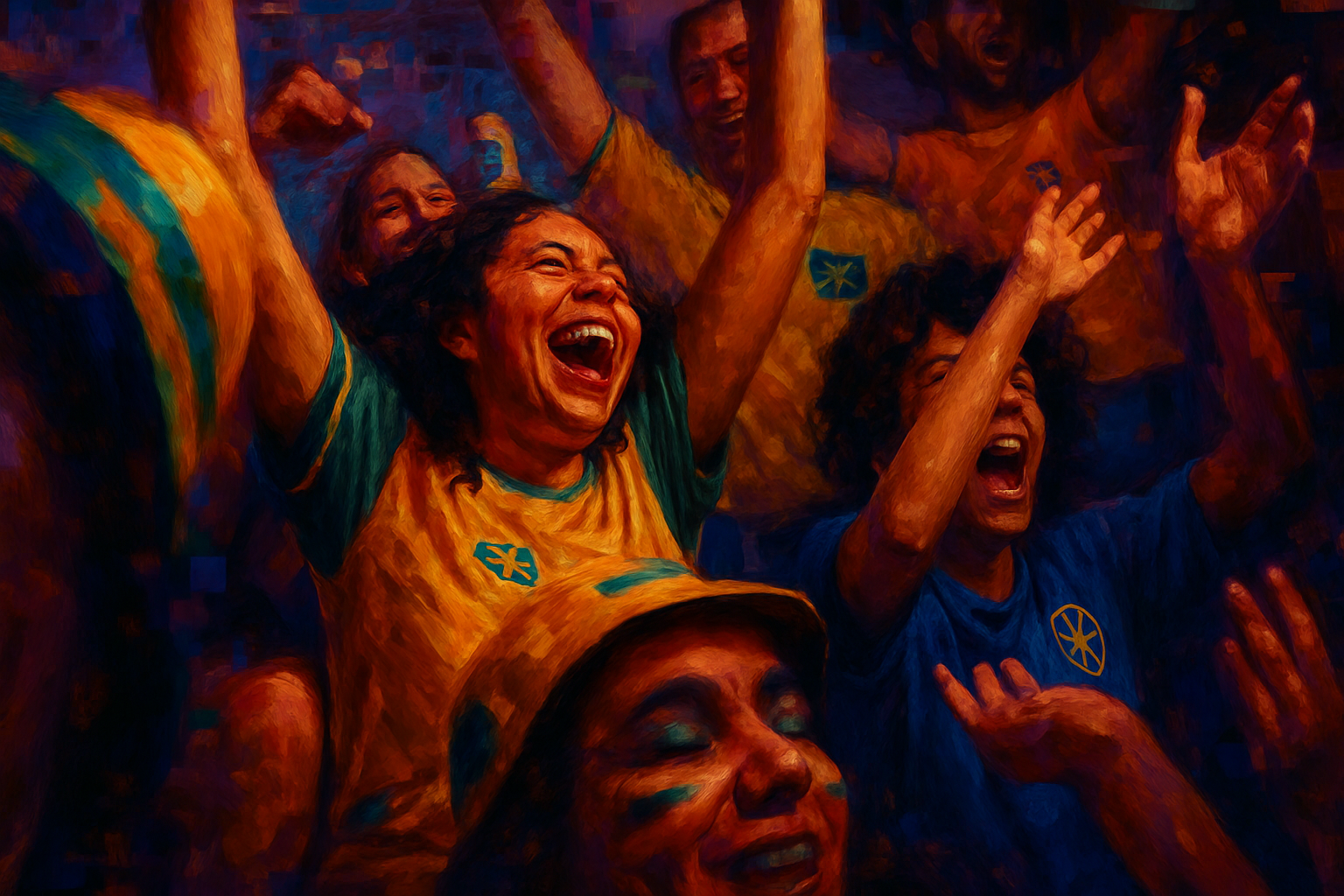
The last time Brazil won the World Cup, Mark Zuckerberg was still in high school and the iPod had yet to be invented. That was 2002, which in soccer years might as well be the Paleolithic era.
Brahma, the Brazilian beer brand owned by AB InBev's local subsidiary Ambev, is wagering that two decades of futility have produced a nation of believers — or at least a nation willing to make ritualistic vows in exchange for free alcohol. The brand's World Cup campaign, "It's OK to Believe," centers on the Brazilian tradition of the promessa, a public pledge that fans make and fulfill only if their team wins. (Think of it as a spiritual parlay, but with less paperwork.)
The offer is straightforward: if Brazil wins its sixth title, Brahma will be free nationwide, distributed through the delivery service Zé Delivery, supermarkets and accredited bars. Mr. Consumer makes a promise; Brahma makes one back.
The campaign is one of several from Latin American marketers that treat the World Cup not as a sales occasion but as a cultural membership card. Corona, the Mexican beer brand owned by Constellation Brands, built its campaign around "el extra," the local notion of giving more than required — a concept the brand ties to Mexico's distinction as the only country to host three World Cups. Sabritas, the PepsiCo-owned snack brand, invoked "convivencia," a Spanish word that translates roughly to "togetherness" but carries considerably more warmth than "hanging out."
American marketers, by contrast, have tended to approach sporting events with the subtlety of a coupon circular. Buy the wings. Here is a discount code. Enjoy your party.
The difference, several industry observers have noted, is that the Latin American campaigns embed the product inside an emotional experience rather than beside it. The beer is not refreshment; it is participation. The chips are not a snack; they are an entrance fee to the gathering.
Whether this approach translates north of the border remains an open question. But for marketers hoping to reach Hispanic audiences in the United States, the lesson may be worth studying — preferably before another 24 years go by.
Original story published in adweek.com: "Latin America's World Cup Ads Have a Secret U.S. Brands Keep Missing"